
Coat condition as a health signal
Dull coat, scurf and slow shedding are diagnostic. What to change in the wash bay, and what to change in the feed room.
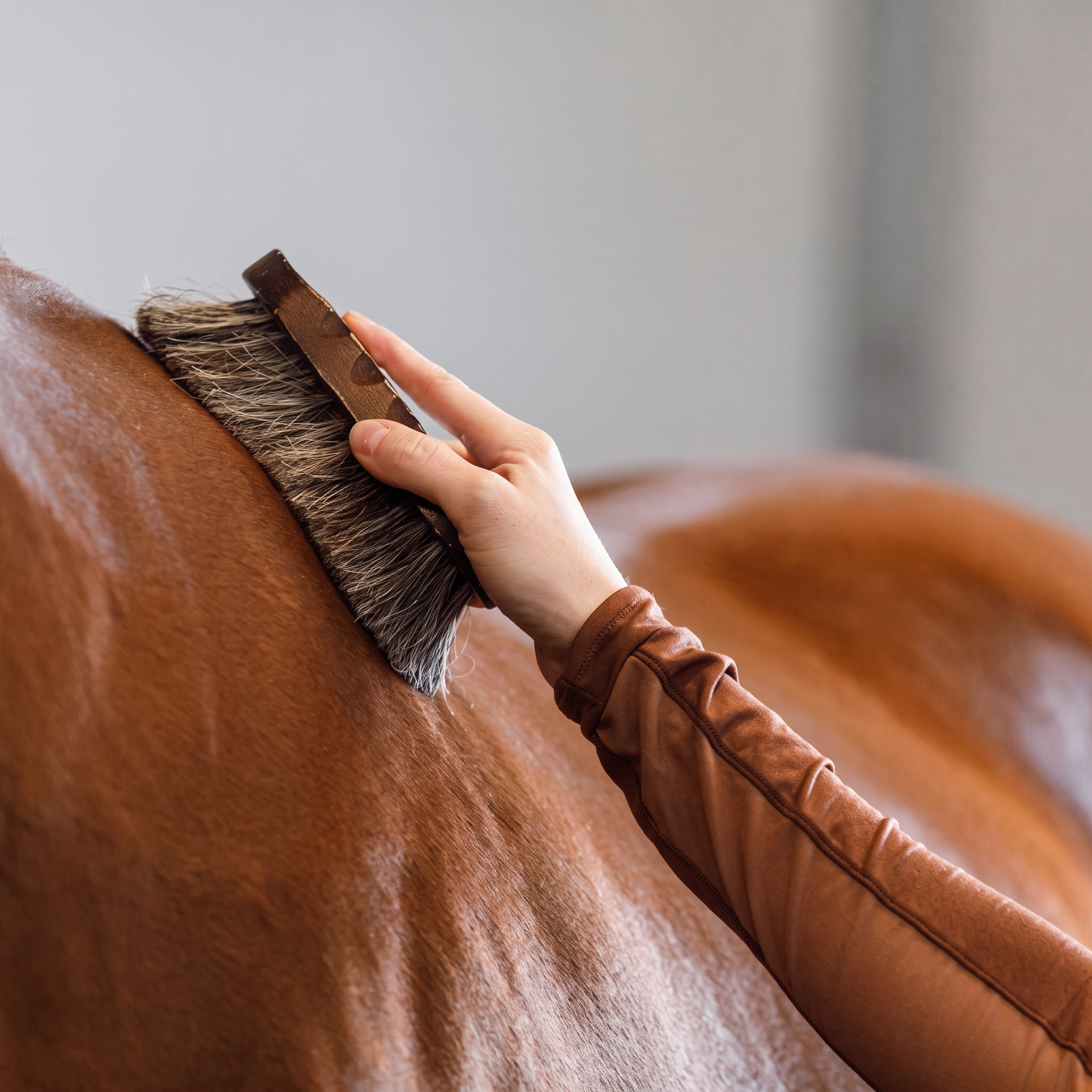
A coat is the largest organ on the horse and the easiest one to read from across the yard. Before you reach for another bottle, work out whether what you are seeing is a grooming problem or a health problem wearing a grooming disguise.
Read shine as a whole-horse signal
A coat that reflects light evenly usually reflects a horse that is digesting well, drinking enough and free of low-grade discomfort. Shine that disappears over a few weeks is worth investigating before it is polished over.
Tell scurf apart from dirt
Dirt lifts with a curry comb and a wash. Scurf keeps coming back within days, often along the neck, girth line and tail head. Persistent scurf points to skin and sebum quality rather than to how often the horse is brushed.
Treat slow shedding as information
Compare the horse to the others in the same paddock under the same rugs. A horse holding its winter coat weeks longer than its neighbours is telling you something about condition, workload or health that a set of clippers will hide rather than solve.
Fix the wash bay habits first
Over-washing strips the natural oils that create shine, and shampoo left in the coat causes irritation and flaking. Rinse longer than feels necessary, wash less often than you think, and let elbow grease do more of the work than product does.
Then look at the feed room
If grooming is sound and the coat is still dull, the answer is usually further back: forage quality, trace minerals, protein, or a gut that is not absorbing what it is given. Change the base, then give it a full coat cycle before judging the result.
When to call the vet
- Rapid or widespread hair loss with broken, bleeding, weeping or severely swollen skin.
- Severe, uncontrollable itching that causes self-injury or marked distress.
- A major coat change accompanied by rapid weight loss, severe lethargy, fever or loss of appetite.
This guide is general horsemanship information and does not replace veterinary advice. Routine coat concerns can be managed with appropriate grooming, nutrition and monitoring.