
Reading the morning leg check
Heat, fill and digital pulse tell you more than any scan you will book this month. A practical framework for the two minutes you spend on each horse every morning.
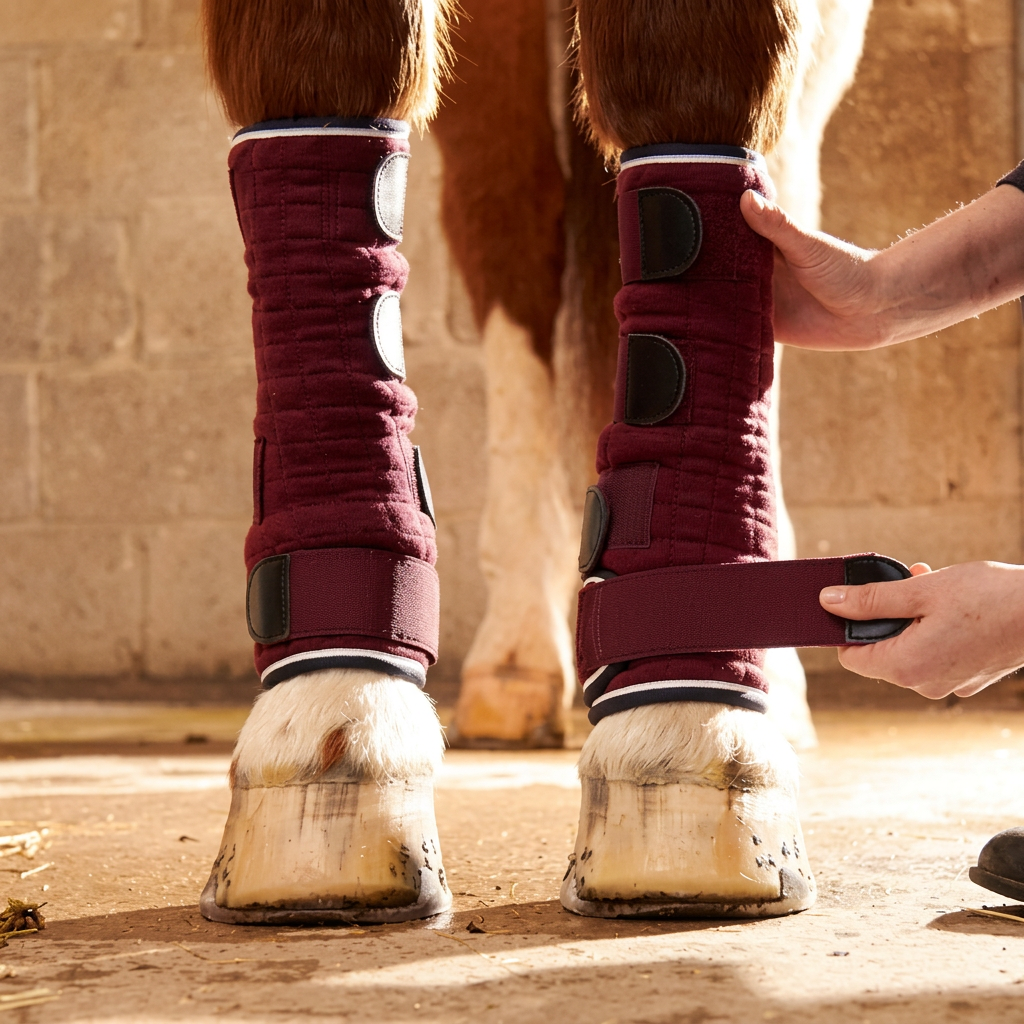
The value of a leg check is not in any single morning. It is in doing it the same way, at the same point in the day, so that you build a picture of what normal looks like on that horse. Once you know the baseline, a change announces itself long before it turns into lost work.
Look before you touch
Stand square in front of the horse, then behind. Compare left to right for outline, filling and how the horse is loading each limb. Asymmetry you can see from a distance is the first signal worth following up.
Feel for heat
Run the back of your hand down each limb, front then hind, always comparing the same structure on the opposite leg. Warmth from a rug, bandage or the sun is easy to mistake for inflammation, so check before the horse has been worked or wrapped.
Check fill and sensitivity
Palpate the tendons, the fetlock and the pastern with firm, even pressure. Note soft filling that presses out, any thickening along the tendon line, and whether the horse reacts to pressure in one spot repeatedly.
Find the digital pulse
Locate the pulse at the back of the fetlock on both front feet. A faint pulse is normal. A strong, bounding pulse, especially on one foot, tells you something inside the hoof needs attention now.
Watch a few steps
Walk the horse in a straight line on a hard surface. Combine what you felt with what you see moving. A leg that is warm and filled but moves evenly is a different conversation to one that is warm, filled and short-striding.
When to call the vet
- Serious swelling or inflammation, especially when the leg is markedly hotter or visibly larger than its partner.
- The cause cannot be identified, or the horse is suddenly very lame, unwilling to bear weight or in significant pain.
This guide is general horsemanship information and does not replace veterinary advice. Products and routine care are not a substitute for assessment of a serious or unexplained problem.